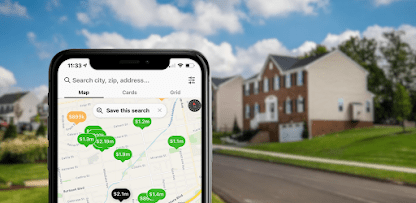
Okay, real talk. I scroll Zillow at night just like you do. I do it for fun, for research, and sometimes just to dream about a porch. But here’s what I’ve learned after years of helping people buy homes in the Susquehanna Valley — not every home search platform shows you the same thing, and some of them are missing the listings that matter most.
So let’s break this down. Here are the best platforms to search for homes for sale, what each one is actually good at, and the one thing none of them will ever do for you.
The big three (you’ve heard of these)
1. Zillow
The most popular, the most addicting, and honestly the easiest one to use. Zillow’s saved searches and alerts are great. The Zestimate is a fun toy but please don’t use it to actually price a home — it’s an algorithm, not an expert. Zillow pulls from MLS data, but listings can be delayed and sometimes show up as “sold” or “off-market” when they’re actually still available.
Best for: casual browsing, saved alerts, big-picture market research.
2. Realtor.com
This is the one I trust the most for accuracy. Realtor.com pulls directly from the local MLS — the same database I’m in as your agent — so the listings tend to be the most current and complete. Status updates happen faster, photos are usually higher quality, and the listing info is more reliable.
Best for: serious searches when you need accurate, real-time data.
3. Redfin
Redfin’s interface is clean, their map view is fantastic, and they include a lot of data points (like price history and Tour Insights) that other sites don’t. They also have their own agents, which is fine, but it can sometimes funnel you into their pipeline.
Best for: data nerds, urban buyers, anyone who loves a good filter.
The underrated ones
4. Homes.com
Homes.com has been quietly stepping up their game. Their layouts are clean, they show neighborhood and school details well, and they’re not as cluttered as some of the big ones. Worth checking, especially for relocation.
5. Trulia
Owned by Zillow but with a different focus — Trulia leans into neighborhood data. Crime maps, commute times, what locals say about an area. If you’re moving somewhere unfamiliar, this one’s helpful.
6. Movoto
Less crowded, often shows price reductions clearly, and good for tracking how long a home has been on the market. I use it occasionally to cross-reference.
7. The brokerage websites
This is where most people miss out. Local brokerage websites (mine included) often have access to listings before they hit the public sites — pre-MLS, coming soon, pocket listings. If you’re working with an agent in the area, they can give you access to inventory you won’t find anywhere else.
What about the MLS itself?
Buyers ask me this all the time: “Can I just search the MLS directly?”
Short answer: not exactly. The MLS is a private database for licensed agents and brokers. But here’s the good news — when you work with an agent, we can set you up with an MLS portal that gives you access to nearly everything we see, including listings as soon as they hit. No third-party delays, no “off-market” confusion.
It’s like having the real menu instead of the printed-out version that’s been sitting on the counter for two weeks.
The thing none of these platforms can do
Here’s the part that nobody tells you. No home search platform can tell you whether a house is actually right for you. They can show you photos. They can give you square footage. They can tell you the asking price. But they can’t tell you if the neighborhood is going to feel safe at night, if the roof is about to need replacing, if the asking price is reasonable for the area, or if the seller is motivated.
That’s the agent’s job. That’s my job.
And honestly, that’s where most online buyers get into trouble. They fall in love with a Zillow listing, write an offer without seeing the inside, and end up with a money pit. Or they wait too long because they assumed the Zestimate was accurate, and the home sells for $20K over asking because the algorithm was off.
The platforms are tools. They’re great tools. But they don’t replace having someone who knows the local market in your corner.
How to actually use these platforms well
A few things I tell every buyer:
Set saved searches on two or three different platforms so you don’t miss anything. Don’t rely on the Zestimate or any auto-valuation tool for offer pricing. If a listing looks too good to be true, it probably is — call your agent before you fall in love. Always check the listing date and price history; you can learn a lot from how long it’s been on the market.
And when you find something you like, call me (or your agent) the same day. The good ones go fast right now, especially in our area.
A note for first-time buyers
If you’re new to all this, please don’t let the platforms intimidate you. Pick one (I’d start with Realtor.com), set up a search, and start looking. Don’t worry about clicking “contact agent” on every listing — that just sends your info to random agents who may or may not actually know the area.
Instead, find a local agent you trust first, then use the platforms together. That way every house you click on, you have someone you can text and say “what do you think of this one?” — and get a real answer.
Let’s make this easier
The Susquehanna Valley market moves quickly. I know what’s coming on, what’s overpriced, and what’s actually worth your time. If you want help filtering through all this noise, I’d love to set you up with a custom MLS search that’s tailored to your wish list — not to whatever Zillow’s algorithm thinks you want.
What’s the one thing on your home wish list that you’d absolutely not compromise on? Reply and tell me — I’ll keep my eyes open.

Leave a comment